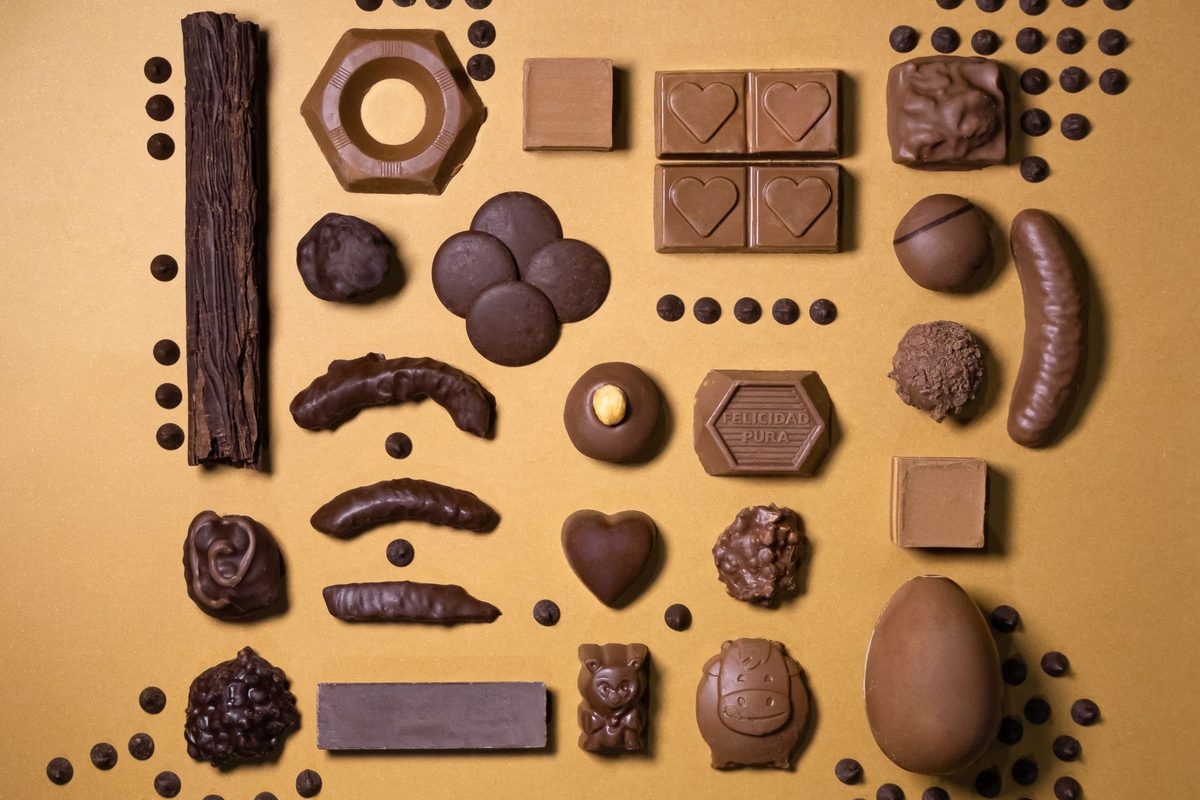
Chocolate is probably the most desirable dosage form there is. Nobody forgets their evening square. In the United States, the brand TABS has made the functional chocolate market explode with formulas dedicated to libido, and European brands are now looking closely at the category.
But an enriched chocolate is not automatically a food supplement. Between the idea and the product on the shelf, there are dosage rules, very concrete technical constraints and a real choice of manufacturer. Here is what I have learned developing sleep, skin and libido chocolates for brands.
1. Chocolate or food supplement: it all comes down to the dose
The European directive 2002/46/EC defines a food supplement as a product marketed in dose form, with a recommended daily intake. That is the point that tips a chocolate one way or the other.
A bar you break by hand is a food. Each square holds an approximate amount of active ingredient, so no dose can be guaranteed. An individually wrapped neapolitan, on the other hand, is a perfectly defined unit of intake. One neapolitan, one dose. That is why I always work with this format for a chocolate food supplement.
Two practical consequences:
- The product is notified like any food supplement before it reaches the market. In France, this goes through the DGAL on the Compl’Alim platform.
- The name “chocolate” remains regulated by directive 2000/36/EC: at least 35% total dry cocoa solids for chocolate, 25% for milk chocolate. A recipe overloaded with other ingredients can lose the right to the word.
2. The key constraint: about 270 mg of actives per neapolitan
This is the number that shapes the whole development. Beyond roughly 6% of actives in the formula, chocolate stops behaving like chocolate: the texture turns sandy, the melt deteriorates and the taste of the actives takes over.
On a 4.5 g neapolitan, 6% means about 270 mg. That is not much. Far less than a capsule, which easily holds 400 or 500 mg.
The conclusion is simple: a functional chocolate is formulated with actives that work at low doses. Standardised extracts and patented ingredients with low-dose studies come before raw plant powders. That selection work happens upstream, and it is where most projects are won or lost.
3. Three chocolates, three positionings
In my projects, demand focuses on three uses. Each one has its own active ingredient logic and its own marketing logic.
The sleep chocolate, a health positioning
The evening square is a natural ritual, which makes it an ideal format for sleep. Two options work well within the 270 mg limit:
- PeptiSleep, a peptide from rice bran protein developed by the Irish company Nuritas. It was tested between 250 and 1,000 mg, which makes it compatible with a neapolitan.
- California poppy extract (Eschscholzia californica), a traditional plant for falling asleep, effective as a concentrated extract.
The skin chocolate, a nutricosmetic positioning
For skin beauty, I work with Reggenerate, the native eggshell membrane developed by the French company Circul’Egg. It naturally provides collagen, hyaluronic acid and elastin, and is used at 300 mg per day.
With a ceiling of 270 mg per neapolitan, the dose is split over two pieces a day. It is a good example of how a technical constraint shapes the directions for use, and therefore the brand message: “two squares a day for your skin” is a simple, indulgent promise that is easy to keep.
The libido chocolate, the phenomenon from the United States
TABS proved that a chocolate dedicated to sexual wellbeing could become a viral product. It is tempting to copy the formula in Europe. Bad idea: it combines maca, epimedium, caffeine and DHEA. DHEA is a hormone and has no place in a food supplement in France.
A European libido chocolate therefore has to be reformulated from scratch, with authorised plants and doses compatible with the format. On the communication side, no health claim is authorised on libido. The message must stay careful and rely on pleasure and ritual, not on a performance promise.
4. Taste and heat, the two enemies of active ingredients
The two technical difficulties I meet on every project are always the same.
The taste of the actives. Peptides, plant extracts, minerals: most are bitter, astringent or metallic. Cocoa masks a lot, but not everything. The choice between dark and milk chocolate, the cocoa percentage and the flavouring are decided according to the actives, not the other way round. That is the heart of my work as a sensory formulator: knowing the taste of each ingredient before it even goes into the recipe.
Heat. Chocolate is melted then tempered, and some actives do not tolerate the temperature. Heat-sensitive actives must be identified at the formulation stage, and the best point of incorporation agreed with the manufacturer. On the plus side, chocolate is a very low-water environment, which protects moisture-sensitive actives well.
Add to that stability testing over time, to check that the declared dose is still there at the end of shelf life, and control of chocolate bloom during storage.
5. Small batch or industrial: choosing your manufacturer
I have chocolates made in France, with two partners that match two very different stages of development.
- A neapolitan specialist, with a minimum order of around 5,000 chocolates. The right entry point for a startup or a brand that wants to test a market without tying up too much stock.
- An industrial partner, with a minimum of around 65,000 chocolates. It becomes relevant once the product has found its audience and unit cost becomes the priority.
Starting small then moving to industrial scale is a classic path, provided the formula was designed from day one to transfer from one site to another. I detail these criteria in my guide on how to choose a food supplement contract manufacturer.
6. Regulatory points to lock down before launch
- Ingredients: plants authorised under national lists (in France, the decree of 24 June 2014), maximum levels for vitamins and minerals.
- Claims: only those authorised under EU regulation 1924/2006 and its lists, with the supporting dose present in the daily serving.
- Labelling: mandatory food supplement mentions, daily dose, warnings, and a nutrition table consistent with the sugar and fat content.
- Product name: the word “chocolate” has to be earned, with the minimum cocoa contents.
Chocolate is also a format that sells pleasure. The line between an indulgent message and an unauthorised health claim is thin, and it has to be drawn when the packaging is designed.
Conclusion
A chocolate food supplement ticks every box of a product that builds loyalty: it is taken with pleasure, it fits into a ritual and it stands out on the shelf immediately. But it is unforgiving. A miscalculated dose, an active that cannot take the heat or a formula copied from an American model, and the project stops at the first sample or the first inspection.
If you are considering a functional chocolate, for sleep, skin, libido or anything else, the best question to ask first is about the active: does it work below 270 mg? That is where I start every project, before we even talk about the recipe. To go further on choosing a format, read gummies, capsules or powder: which dosage form.
Prefer a morning ritual? Read my guide on functional powder drinks too.
Describe your chocolate project and I will reply within 2 working days with a first opinion on feasibility.
Frequently asked questions
The questions I am asked most often about functional chocolate.