The dosage form is the physical shape of your food supplement: capsule, tablet, powder, gummy, drink, chocolate. That choice is often handled as an aesthetic or marketing decision. It is a mistake. The dosage form directly drives the bioavailability of the actives, the cost price, industrial feasibility and, above all, the day-to-day consumer experience.
With a speciality in sensory dosage forms and more than 30 formulas developed on formats ranging from the classic tablet to functional chocolate, here is how I think that choice through for my clients.
Classic dosage forms, efficacy, accessibility, neutrality
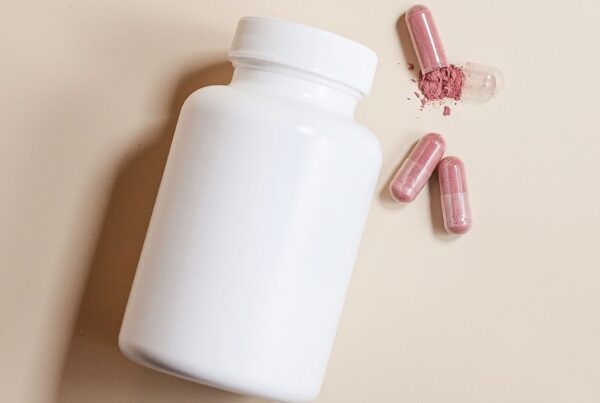
The capsule
This is the most widely used dosage form in nutraceuticals, and for good reasons. It is neutral in taste, with no flavour and no smell, which makes it possible to carry strongly flavoured actives such as garlic, curcumin or omega-3. It is industrially mature, with plenty of manufacturers, accessible MOQs and controlled lead times.
Its limits. The quantity of actives per capsule is constrained, around 500 mg of powder in a standard capsule, which can be a problem for high dose formulas. And it offers no sensory experience at all, which is a real obstacle for a brand that wants to build a ritual.
The tablet
The tablet allows higher dosages than a capsule and offers more flexibility in shape, with bilayer tablets, enteric coating or effervescence. It is slightly more expensive to produce and calls for a more technical formulation, with compression excipients and lubricants.
Effervescent and orodispersible tablets are worth considering for audiences that struggle to swallow solid forms, such as older people and children, or for actives where buccal absorption is an advantage.
Powders and sticks
Powder is the dosage form for high dosages. It is unavoidable for sports formulas such as proteins, BCAAs and creatine, and for supplements where the volume of actives exceeds what a capsule can hold. The powder stick to dilute offers a convenience of use that can become a strong marketing argument.
Its constraints. Flavours and sweeteners are almost always needed to mask the taste, which makes the formulation more complex. And packaging costs, doypacks or individual sticks, can be high.
Sensory dosage forms, consumer experience at the centre
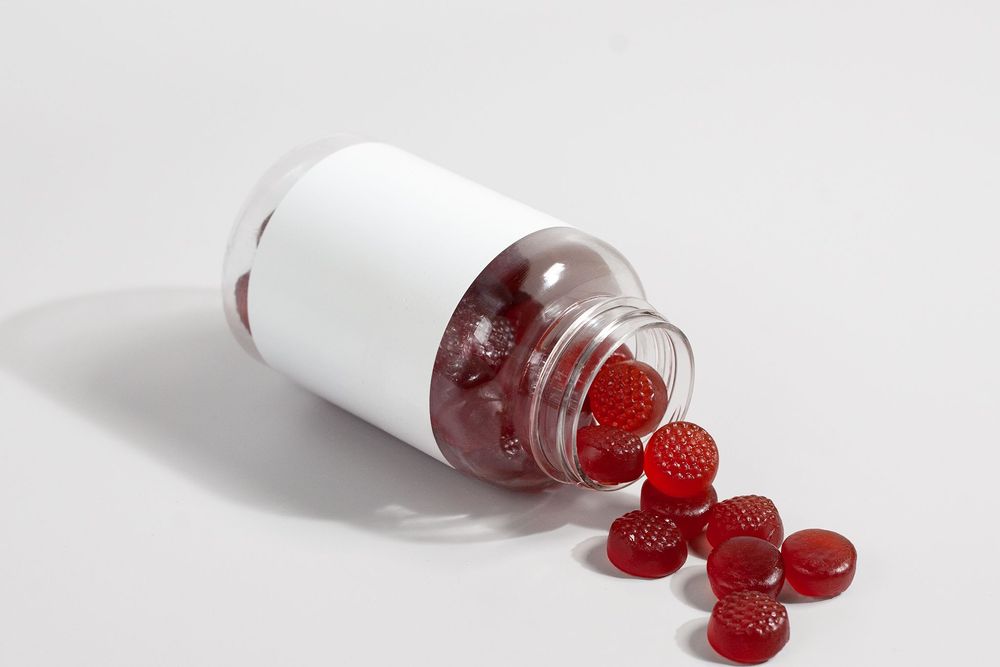
Gummies
In five years gummies have become one of the most requested dosage forms, driven by the American market and by brands such as Olly and Ritual. The reason is simple, consumers want to take them. Adherence, meaning how regularly people take the product, is structurally better on gummies than on capsules.
But gummies are also the hardest dosage form to formulate properly. The critical technical points:
- Gelatin against pectin base. Gelatin, of animal origin, gives a firmer and more elastic texture. Pectin, of plant origin, is softer and suits vegan formulas but behaves differently in production
- Thermal stability of the actives. The gummy manufacturing process involves high temperatures, 70 to 90°C. Some heat sensitive actives such as probiotics, B vitamins and free omega-3 degrade. The formulation has to anticipate that
- Real dosage against theoretical dosage. Production losses on gummies are larger than on capsules. You have to overdose at formulation to compensate and guarantee the dosage in the finished product
- Masking bitterness. Many actives have a bitter or unpleasant taste, zinc, magnesium citrate, botanical extracts. Flavour masking is an art in itself, and a bad flavour to active balance delivers a product nobody wants to take twice
- Sugar content. A classic gummy contains between 2 and 4 g of sugar per piece. For brands targeting consumers who watch their blood sugar, in sport, diabetes or keto, alternatives exist such as polyols and allulose, but they complicate the formulation and the texture
Functional drinks and shots
The 30 to 60 ml shot concentrated in actives is a format that is rising fast, particularly in wellness and cognitive performance. It allows high dosages, fast absorption, and creates a highly visible ritual, the morning shot. The main constraint is aseptic filling or pasteurisation, which requires specialised manufacturers and higher costs.
Drinks to rehydrate, in sachets or sticks, offer an interesting compromise: dosage flexibility, low logistics cost, strong flavour customisation. It is a format that is particularly relevant for sport and recovery.
Functional chocolates and fortified foods
This is the dosage form French brands have explored least, and yet one of the most promising for building a differentiating brand. Putting actives into a dark chocolate, a protein snack or an energy bar creates an incomparable product experience.
The complexity is real. The interactions between the actives and the food matrix, stability in storage, the regulatory classification of a fortified food against a classic food supplement, all of it takes specific expertise. But for a brand that wants to step out of the classic nutraceutical shelf, it is a serious avenue.
How to choose, the decision matrix
Here are the questions to ask yourself in order to choose the right dosage form:
Who is your target consumer? A seasoned athlete readily accepts capsules or a powder. A mainstream wellness consumer is looking for a pleasant experience. An older audience may struggle with solid forms. The dosage form has to match the habits and the expectations of your actual buyer.
What are your actives? Some actives carry strong dosage form constraints. Oils such as omega-3, CBD and fat-soluble vitamins require softgel encapsulation or a liquid formula. Probiotics are sensitive to heat and humidity. High dose actives such as magnesium and vitamin C sit better in powders or tablets.
What is your price positioning? Sensory dosage forms cost more to produce. If your target selling price cannot absorb that extra cost while keeping a viable margin, a classic dosage form is the wiser choice at launch.
What ritual do you want to create? A colourful gummy in a nice jar creates a very different morning ritual from a white capsule in a plastic bottle. That dimension of the product experience feeds straight into repeat purchase, and therefore into the long-term value of your customer.
The criterion people forget, adherence
Adherence is how regularly consumers take their supplement. It is the real judge of a dosage form.
A highly effective supplement that is unpleasant to take will be abandoned after a few weeks. A supplement that creates a genuine moment of pleasure, or that slots naturally into an existing routine, will be taken regularly, will give better results, and will generate repeat purchase and positive reviews.
My conviction is that the brands which win over the long run are not the ones with the most “scientific” formula, but the ones that have understood that the real efficacy of a food supplement is the combination of formula quality and the desire to take it every day.
Conclusion
There is no universally “best” dosage form. The right choice depends on your audience, your actives, your positioning and your brand strategy. What is certain is that the choice deserves serious technical thought, and not just inspiration taken from a competitor’s website.
If you are developing a food supplement and hesitating over the dosage form, let us take 30 minutes to identify together the form best suited to your project.
Frequently asked questions
The questions project owners most often ask before getting started.
Are gummies as effective as capsules in terms of dosage?+
Which dosage form is simplest for a first launch?+
Can you formulate gummies with no added sugar for food supplements?+
Which dosage form should you choose for vegan food supplements?+
Your project does not fit in a box?