Launching a food supplement brand is a more complex project than it looks. The barriers to entry seem low, a contract manufacturer, some packaging, an online shop, but the mistakes that ruin a launch are usually made very early, before a first sample has even been ordered.
Having supported more than 20 brands through their development, startups, DNVBs and pharma brands alike, here are the steps I apply systematically, with the posture of a product co-founder rather than that of a plain supplier.
1. Start with positioning, not with the formula
This is the most common mistake. People look first for “what formula am I going to make” before answering the real question, for whom, for what, and against whom?
A well positioned product meets three conditions:
- A clear and measurable benefit for a precise consumer profile
- A difference that is perceived against the existing alternatives
- A promise consistent with what the formula can actually deliver
The most dynamic food supplement markets at the moment are women’s health (hormonal balance, fertility, menopause), the microbiome (pre and probiotics, postbiotics), cognitive performance, sport and recovery, and sleep and stress management.
Only once the positioning is settled can you write a solid product brief and choose the ingredients that will embody the promise.
2. Choose the dosage form according to your promise, not your preferences
The dosage form is not simply an aesthetic choice. It drives the bioavailability of the actives, the consumer experience, the cost price and industrial feasibility.
Classic dosage forms such as capsules, tablets and powder sachets remain the most accessible industrially, with reasonable MOQs, plenty of manufacturers and controlled costs. They suit audiences that are looking for efficacy above all.
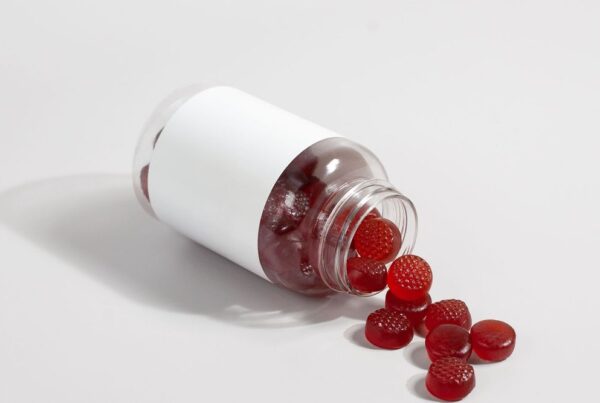
Sensory dosage forms such as gummies, functional chocolates, drinks and effervescent tablets answer a different logic. They create a desirable daily ritual, lower the barriers to adherence, and build a stronger brand imagination. Repeat purchase is often better on these formats because consumers want to take them.
My speciality is precisely that tension between efficacy and pleasure. Formulating a gummy that carries a real dose of actives, with a pleasant texture and no bitter aftertaste, takes technical command that not every formulator has.
3. Develop an effective and defensible formula
A high performing formula is not just a list of trendy ingredients. The three pillars of a solid formula:
Proven efficacy. The dosages have to match the levels used in clinical studies, or the doses usually recognised as active. An extract at 10 mg when the studies show an effect at 300 mg has no therapeutic value.
Verified raw material quality. On my projects I systematically qualify ingredients through HPLC analysis and supplier visits. The reality of the market is brutal, 80% of botanical extracts do not comply with their stated specifications. Underdosing, adulteration, incorrect standardisation, the problems are frequent and often invisible without testing.
Consistency with the marketing claims. European regulation (EC 1924/2006) strictly frames what can be said about a food supplement. Bringing the regulations in from the formulation stage avoids having to reformulate or rewrite your communication halfway through.
4. Secure French and European compliance
Regulation is often treated as a box to tick at the end of the project. That is a strategic mistake. It has to be built into the product brief for three reasons:
- Some ingredients are subject to defined maximum doses, which constrain your formulation
- The health claims authorised by EFSA are limited, and your marketing promise has to be able to rest on one of them
- In France, a declaration to the DGCCRF through Téléicare is mandatory before going to market, with lead times to plan for
If you are targeting several European markets, France, Belgium, Switzerland and Poland for instance, the regulations differ on authorised plants, on claims and on doses. A multi-country regulatory review during development saves you from multiplying formula versions later.
5. Select the right contract manufacturer
I have set out the selection criteria for a contract manufacturer in a dedicated article. The essentials are genuine dosage form specialisation, verified ingredient quality, and certifications suited to your target market.
One specific point on geographic strategy. I work regularly with manufacturers in France and in Poland. On certain dosage forms and volumes, the France to Poland cost difference can reach 30 to 40% at equivalent quality. It is a competitiveness lever that most French brands leave on the table.
6. Optimise the cost price from the design stage
The cost price is built at the brief, not during the negotiation with the manufacturer. The levers you can pull:
- Ingredient choice. Two sources of the same active can differ in price by a factor of five at equivalent quality. Knowing the supplier market is decisive.
- Dosage form. Capsules remain the cheapest format to produce. Every sensory format adds industrial complexity and cost.
- Volume. MOQ thresholds have a strong impact on unit cost. Anticipating 12-month volumes lets you negotiate more competitive launch prices.
- Packaging. Packaging can represent 20 to 40% of the cost price. Glass against plastic, the size of the pill box, the number of capsules per unit, every choice has a direct impact.
My role here is to think through your target cost price before sourcing starts, rather than discovering at the end of the road that the margin is not viable.
7. From market launch to range strategy
A successful first product is not an end in itself, it is the starting point of a range. From the development of the first SKU, I push my clients to think on two horizons:
Short term. Will the product have a sufficient repeat purchase rate? Do the format, the taste and the routine it creates make people want to recommend it? Consumer adherence is the best predictor of success for a supplement brand.
Medium term. Which range extensions are consistent with the positioning? Can ingredients be shared between references to cut sourcing costs? Is there a premium range to build on a sensory dosage form?
A successful launch is a product that wins, commercially and in reputation. That is the objective I put at the centre of every project.
Conclusion
Launching a food supplement brand calls for command of product strategy, formulation, regulation, industrial sourcing and project economics all at once. That is rarely a skill set a young team holds in-house.
Which is exactly why an independent R&D consultant, one who works in your interest rather than that of a laboratory or a manufacturer, can make the difference between a failed launch and a product that establishes itself in its market.
Let us talk about your project in 30 minutes.
Frequently asked questions
The questions project owners most often ask before getting started.
How long does it take to launch a first food supplement?+
Do food supplements have to be declared before being sold in France?+
What minimum budget should you plan to launch a first food supplement range?+
Can you launch a food supplement brand without scientific expertise?+
Your project does not fit in a box?